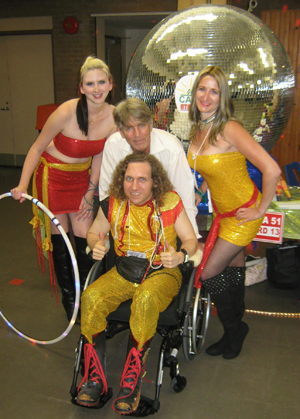
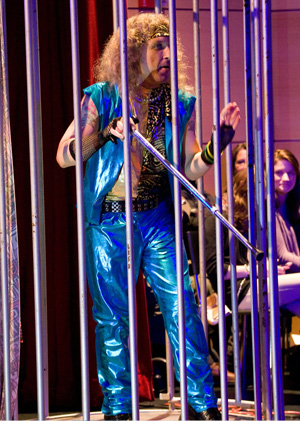
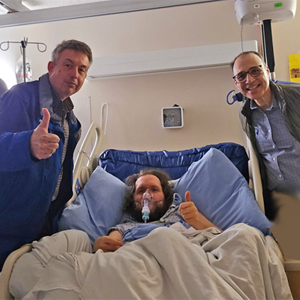
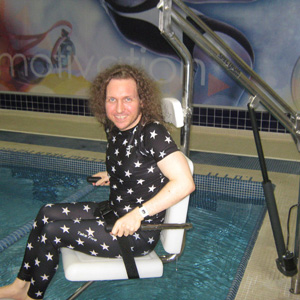
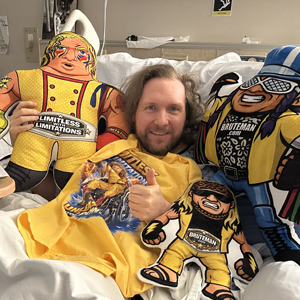
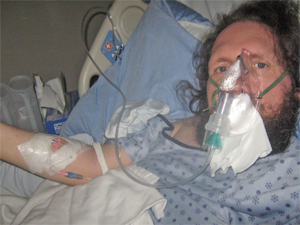
Welcome to Roger Foley Music, a website featuring original music from the project “Limitless With Limitations” — a powerful collection of songs about perseverance, identity, and pushing forward through adversity. I’m a Canadian artist living with a severe neurodegenerative condition called Spinocerebellar Ataxia Type-14, and this music is part of a larger mission: to raise awareness and help fund the independent home care I need to return home and live with dignity in the community. Every view, share, and purchase directly supports this goal. I’m deeply grateful to the Life Care Network for their support in helping raise the funds needed for me to return home with proper care and independence. Thank you for being part of this journey.
— Roger Foley

SOCIAL MEDIA


NEW SINGLE

LIMITLESS WITH LIMITATIONS

MORE MUSIC PURCHASE ON APPLE MUSIC

MERCH

$29.99

$29.99

SHOP NOW

PHOTOS


SEE MORE PHOTOS

VIDEOS

FEATURED LYRIC VIDEO

OTHER VIDEOS

WATCH:
LIMITLESS WITH LIMITATION
LYRIC VIDEO

WATCH:
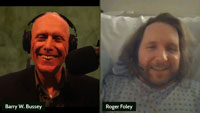
Freedom Feature with Barry Bussey
An Interview with Roger Foley
about Music & Projects

WATCH:
Roger Foley Update
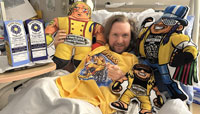
New Plushies & More
Coming In 2026

MORE VIDEOS

ABOUT

About Roger Foley

Roger Foley is a Canadian independent artist whose work is rooted in resilience, purpose, and lived experience. He is a graduate of Carleton University with degrees in Economics and History, a former National E-Business Manager at the Royal Bank of Canada, founder of the Canadian Ataxia Conference, and a recipient of a national volunteer honour through the Prime Minister’s Volunteer Awards.


Today, his life is defined by a severe neurodegenerative disease—Spinocerebellar Ataxia Type-14—which has progressively impacted his mobility, coordination, and independence.


The Music of Roger Foley

Roger Foley began writing music in high school, developing early demos that captured his distinctive voice and songwriting style. Several of these works were later professionally produced, with plans for release in 2013. However, due to the progression of his health condition and the circumstances surrounding his care, those releases were never realized.


Roger’s music stands as a testament to his resilience, creativity, and determination. Known for his high-pitched, emotive vocal style, his recordings blend heartfelt lyrics with memorable melodies that reflect both personal struggle and enduring hope.


His song “Limitless With Limitations” serves as a defining anthem of this work. It invites listeners into a journey of perseverance and empowerment, emphasizing that limitations do not define a person’s potential. The message is clear: even when faced with significant challenges, individuals can still achieve meaningful goals and success—sometimes by taking a different path, but ultimately arriving at the same destination.


Through the Life Care Network, Roger is now working to bring his music to the world while using it as a foundation to support his independence. His body of creative work—including unreleased music, media, and intellectual property developed over decades—is being leveraged to fund the self-directed care he needs to return home.


In this way, the voice and work of Roger Foley’s past are helping to safeguard the life and future of Roger Foley today.


“Limitless With Limitations” means that no matter what limitations someone lives with, they can still be limitless in achieving their goals and dreams.

Limitations do not define your future. You can still be limitless.


The Reality

For over a decade, Roger has been confined in a hospital following repeated breakdowns of unsafe and inadequate agency-based home care. These failures were marked by disorganization, lack of accountability, and an inability to provide consistent, safe support. Roger requires full-time care to live safely. However, the current system in Ontario relies on centralized, one-size-fits-all agency-based models that do not allow individuals with disabilities to choose or manage their own caregivers. This resulted in inconsistent, and at times completely unsafe, care.


Roger experienced repeated and serious safety failures while receiving agency-based home care. These included food contamination and poisoning, unsafe cooking practices such as burners being left on that resulted in a fire, and lost or incorrect medications appearing in his home. He also sustained injuries during exercise routines and Hoyer lift transfers performed by untrained workers. Staff frequently lacked basic knowledge of equipment and fall prevention, and scheduling failures led to missed or chaotic care, including multiple workers arriving at once or staff falling asleep during shifts. These were not isolated incidents, but part of a pattern of unsafe and unreliable care that made it impossible for Roger to live safely at home under the agency-based system.


Despite raising concerns through the proper channels, meaningful action and resolution have not been achieved. As a result, he remains in hospital—not by choice, but because it is currently the only environment where some level of care is guaranteed.


Throughout this journey, Roger has faced profound challenges—not only physically, but within a system that too often places bureaucracy above the needs of vulnerable individuals.


On multiple occasions, medical assistance in dying (MAiD) was raised to Roger by hospital staff without being initiated or requested by him. These were not discussions he sought out; they were introduced by the hospital during a period when he was seeking appropriate care and support to live.


These interactions are not hypothetical. Audio recordings of hospital staff offering and discussing MAiD with Roger have been publicly available for years and are provided below for transparency.


Audio Recordings:
[File One – Staff Interaction Recording];
[File Two – Staff Interaction Recording].


Roger’s response has been consistent and unwavering: to continue fighting—for his life, his independence, and his right to return home with proper care.


These rights are reflected in international frameworks such as the Convention on the Rights of Persons with Disabilities, which affirms dignity, autonomy, and the right to live in the community with appropriate supports.


The Solution: Self-Directed Funding Home Care

The solution is Self-Directed Funding (SDF).


SDF allows individuals with disabilities to choose, hire, and manage their own care teams. It provides consistency, safety, accountability, and the ability to live independently at home with people who understand and meet their needs.


In many countries, this model is standard and recognized as a fundamental right. Examples include Scotland (Self-Directed Support), the United Kingdom (Personal Health Budgets), France (Prestation de compensation du handicap), Australia (Self-Directed Funding), New Zealand and Ireland (Individualized Funding), the Netherlands (Persoonsgebonden budget), Denmark (Borgerstyret personlig assistance), and the United States (Consumer-Directed Care).


These systems are built on a simple principle: people must have real control over their own care in order to live safely and with dignity.


In Canada, access to this level of autonomy remains extremely limited or effectively unavailable. Care is largely controlled through centralized, agency-based systems that restrict choice and continuity.


The consequences are not theoretical. They include unsafe care, lack of accountability, and people being left without the consistent support they require to live. In some cases, individuals facing gaps in care and support have publicly reported turning to medical assistance in dying in the absence of viable alternatives.


This is why Self-Directed Funding is not just a policy preference—it is a matter of safety, dignity, and the right to live in the community with proper support.


Evidence and Reported Cases

There are documented cases in Canada where individuals with serious disabilities have publicly reported seeking medical assistance in dying (MAiD) in the context of inadequate access to supports, services, or safe housing. Names that have been widely discussed include Sophia, Sean Tagert, Raymond Bourbonnais, and others, with additional reports and commentary from advocates and media involving cases such as Sathya Dhara Kovac, Jennifer Hatch, and Chris Gladders.


These cases are complex and not identical, but they have raised significant concern among disability advocates, clinicians, and the public about situations where people experience a lack of viable alternatives, insufficient supports, or prolonged barriers to care.


The point is not to generalize every case the same way, but to recognize a serious pattern being debated in Canada today: when adequate care, housing, and support are not accessible, people can be placed in circumstances where their options are severely constrained.


This is why access to Self-Directed Funding and proper home care support is not theoretical—it is essential to ensuring that individuals have real, meaningful alternatives and the ability to live safely with dignity.


The Mission: Limitless With Limitations you think you are tertiary

This music project is more than a collection of songs—it is a mission to raise awareness and generate the funding needed to return home with proper care.


Through music releases, merchandise, and creative projects, Roger is building a pathway back to independent living.


How You Can Help

If this story resonates with you, there are meaningful ways to help:


🎵 Stream or purchase the music
👕 Purchase merchandise
❤️ Donate through Life Care Network with either a one time donation or monthly donation.


Closing

This is more than a music project—it is a fight for dignity, independence, and the right to live in the community with proper care.


“Never give up battling for your freedom and your rights. Always believe the system can change.”


🚨 URGENT UPDATE: CURRENT SITUATION

Roger Foley’s situation at London Health Sciences Centre (LHSC) Victoria Hospital has escalated to a critical point where urgent legal intervention is now required to protect his life, health, and basic human dignity.


Despite years of advocacy and ongoing legal efforts, Roger Foley’s situation at London Health Sciences Centre (LHSC) has escalated. Medically required accommodations have been withdrawn, and access to essential care—including food, hydration, and assistance—has been restricted. LHSC has removed and refused to restore medically required amber-spectrum lighting, despite clear evidence that standard fluorescent and halogen lighting—particularly blue-wavelength light—causes Roger significant neurological and visual harm due to his neurodegenerative disease.

Roger’s condition affects his ability to tolerate light at the retinal and neurological level. Exposure to blue-spectrum lighting causes disorientation, visual impairment, and physical distress, directly interfering with his ability to safely receive care.


Despite this, staff continue to enter his room using fluorescent lighting and, at times, direct this lighting toward him. Roger is routinely told to cover his eyes when staff enter, rather than the lighting being adjusted to meet his medically documented needs. This places the burden of protection on him instead of accommodating his disability.


The removal of the amber-spectrum lighting is not justified. These accommodations were used successfully for several years, meet hospital luminance requirements, and provide a safe alternative that does not cause harm.


Importantly, these concerns are not being raised in isolation. Independent disability and advocacy organizations, including the Canadian National Institute for the Blind (CNIB) and other vision-loss organizations, have supported the need for these accommodations and confirmed that they are reasonable and necessary. In addition, hospital-contracted partners, including Sodexo, have confirmed that amber-spectrum lighting is safe and workable within hospital operations. Despite this, LHSC has continued to refuse restoration of these accommodations.


As a result of these conditions, Roger’s ability to safely access food and hydration has been significantly impaired. He is now reliant on intravenous (IV) fluids due to barriers created by unsafe lighting conditions and restricted assistance.


The hospital also continues to block outside caregivers who are ready, qualified, and able to assist with basic non-clinical care, further limiting safe access to food, hydration, and daily support.


Taken together, these actions have created an environment where Roger’s health, safety, and dignity are at serious risk, and where immediate legal intervention is required.


Urgent Legal Action

An emergency court injunction is now required to:


• Restore medically necessary accommodations
• Allow outside caregivers to assist with basic care
• Prevent further harm while legal proceedings continue


Without it, Roger remains trapped in a situation where his health and safety are at ongoing risk.


How You Can Help Right Now

Urgent support is needed to fund legal action, including court costs and independent expert witnesses required to bring this injunction forward.


If you are able, you can help immediately by:
👉 Support Roger Through the Life Care Network Emergency Fundraiser;
👉 Purchasing music or merchandise, including T-shirts and other items that directly support this effort.
Every action—whether a contribution or a purchase—helps move this urgent legal process forward.


Your support during this critical moment is deeply appreciated and can make a direct difference.

CONTACT

If you would like to connect regarding Roger Foley’s music, collaborations, media inquiries, or support opportunities, please reach out using the contact information below.


Due to Roger’s current health situation and hospital environment, response times may vary. Your understanding is greatly appreciated.


📧 Email: music@rogerfoley.com